Bongo Flava Then and Now: The Diamond Effect and the Future of Our Sound
SheWrites
August 27, 2026
9 min read
109 views
0 favorites
Open Access
Diamond Platnumz did not create Bongo Flava, but his resilience, investment and international ambition changed its standards. As Tanzanian artists increasingly embrace Afrobeats and Amapiano, this article examines the Diamond effect and asks whether Bongo Flava is evolving or slowly losing its unique identity.
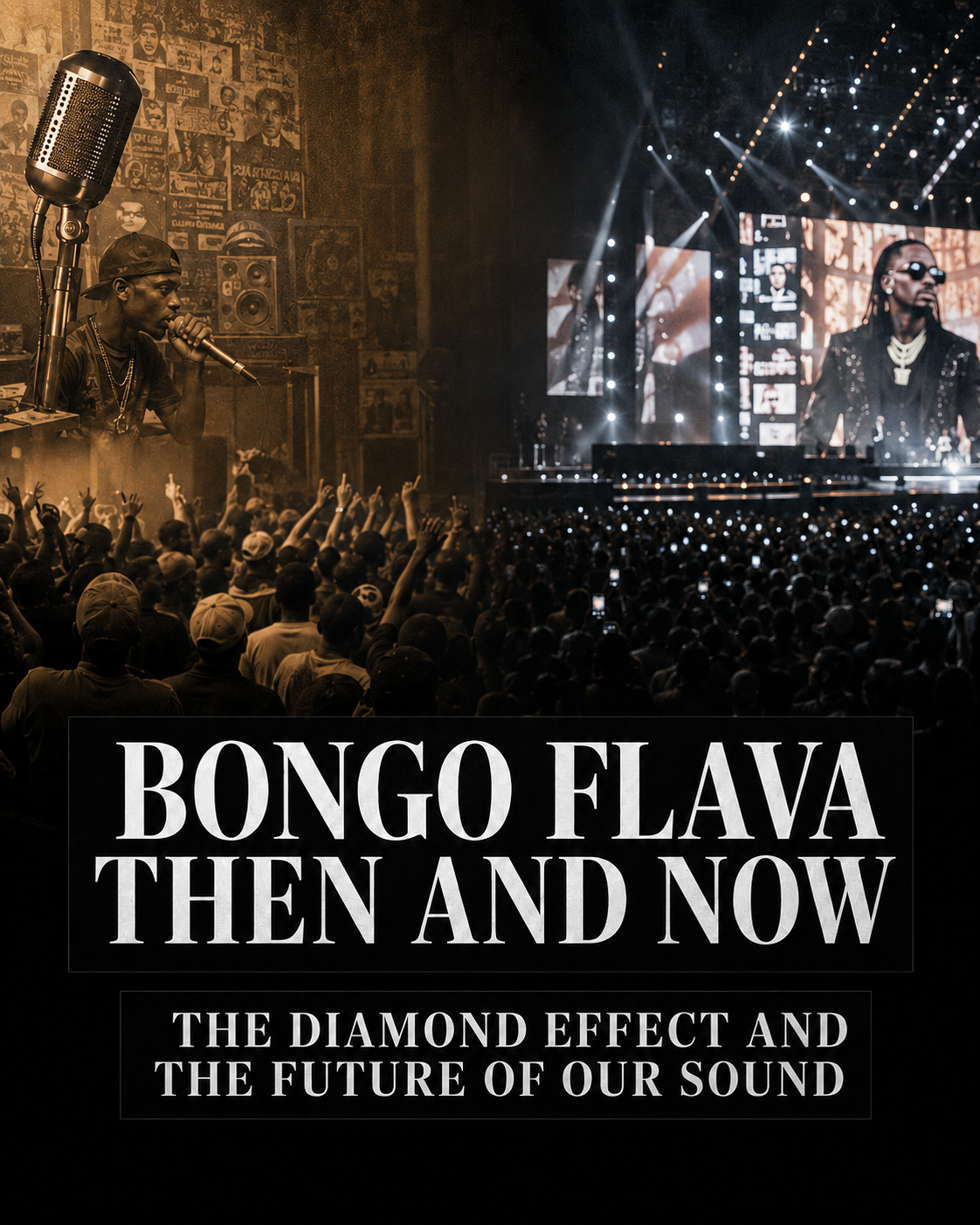
Bongo Flava did not begin with Diamond Platnumz. Many talented artists, producers and other music stakeholders worked hard to build the industry long before he arrived. They gave Tanzania a sound of its own and produced music that remains meaningful today. We appreciate their contribution because without their work, there would have been no foundation for the generation that followed.
However, for many years, Bongo Flava circulated mainly within Tanzania and other East African countries. Our artists were famous at home, in Kenya, Uganda, and a few neighbouring countries, but taking the music beyond East Africa remained a major challenge.
Some people blamed the Kiswahili language. They argued that our musicians could not reach wider audiences because most people outside East Africa did not understand the language. This debate continues today. Some still believe that Tanzanian artists must sing in English if they want to compete internationally. However, Diamond Platnumz’s journey has already shown us that language alone cannot be the problem.
Diamond came from a very poor background in Tandale. His mother reportedly gave him her gold chain to sell so that he could raise money to record his music. That sacrifice tells us how difficult the beginning was for both of them. Nothing was guaranteed, but they believed in the dream and used the little they had to pursue it.
When Diamond released his breakthrough song, *Kamwambie*, his life changed. More importantly, he did not disappear after his first hit. Since then, he has remained one of the biggest names in Tanzanian music. Many artists release one or two successful songs and then struggle to maintain the same level, but Diamond’s hunger for success has always been different. He has continued working, improving and finding new ways to remain relevant, despite the challenges and criticism he has faced since the beginning of his career.
Diamond also changed how Tanzanian artists invest in their music. He treated music videos as serious productions at a time when many artists did not invest much in visuals. His videos, fashion, dancing, performances and branding introduced a different level of professionalism. He understood that talent alone was not enough; the music also had to be packaged, promoted and marketed properly.
His national and international nominations brought attention to Tanzania. Through collaborations with artists such as Davido, Flavour, Ne-Yo, Rick Ross, Koffi Olomide and many others, Diamond introduced himself and Bongo Flava to different audiences. He was no longer competing only with East African musicians. At one point, his name appeared alongside some of the biggest musicians from West Africa. Whether people liked him or not, Tanzania finally had an artist who could stand confidently on major African and international platforms.
The remix of *Number One* featuring Davido was particularly important. It was a major collaboration between a Tanzanian artist and a Nigerian star, yet Diamond did not abandon Kiswahili to make the song successful. The song remained proudly Tanzanian and still travelled across Africa. This makes it difficult to accept the argument that Tanzanian musicians must abandon Kiswahili and sing in English to become international.
Nigerian artists themselves do not always use standard English. They mix English with their local languages and Pidgin. Davido’s *Aye*, for example, was widely successful without being written entirely in standard English. Many other West African songs have crossed borders even when listeners do not understand every word. People connect with the rhythm, emotions, performance and identity of the music. Perhaps language matters, but it cannot be the full explanation.
Nigeria and West Africa also have advantages that Tanzania does not have. Their populations are larger, and West Africans are spread across many parts of the world. This gives their musicians a wider audience that can support them through streaming, sold-out concerts and international nominations. Their music industry also has stronger international networks, greater investment and powerful marketing systems. Therefore, comparing Tanzania and Nigeria without considering these differences may be unfair.
Diamond did not stop at building his own career. Through WCB Wasafi, he created opportunities for other musicians and helped introduce artists such as Harmonize, Rayvanny, Mbosso, Zuchu, D Voice and Lava Lava to large audiences. Some eventually left the label, but the role it played in shaping their careers cannot be denied. Diamond showed that a successful musician could create a system that develops other artists instead of focusing only on himself. He transformed his success into a wider entertainment business and created employment and opportunities for many people behind the scenes.
Personally, one of the greatest lessons I have learned from Diamond is resilience and knowing how to handle people. He does not respond to every criticism directed at him. Most of the time, he ignores the noise, continues working and allows his results to answer for him. The more people talk, the harder he appears to work.
His journey proves that you cannot go far if you stop to throw stones at every dog that barks at you along the way. Some people and some criticism simply need to be ignored. Not every accusation deserves an explanation, and not every critic deserves your attention. Sometimes the best response is to continue working and produce results that nobody can deny.
Whether people like it or not, Diamond has set new standards in Bongo Flava. Artists are now expected to think seriously about their music videos, branding, international collaborations, stage performances and business decisions. He proved that Tanzanian music could be treated as a serious business and not simply as entertainment.
Sadly, Bongo Flava now appears to be standing on the edge. Many Tanzanian artists want to sound like Western African or South African musicians. Our beautiful and unique local flavour is slowly disappearing as artists follow Afrobeats, Amapiano and other international trends.
I do not entirely blame them. They want their music to reach the world, and naturally, they look at the sounds currently dominating international markets. They see Afrobeats artists receiving major nominations and performing at sold-out concerts around the world. They also see the success of Amapiano and may believe that following these sounds is their best chance of becoming international.
Some of these experiments have worked. Diamond himself is doing the same thing. His Amapiano-influenced song *Komasava* travelled far and reached new audiences. This makes the issue more complicated. Diamond reached the world through Bongo Flava, but today even he is using Amapiano to reach that same world again.
Should we criticize him and other Tanzanian artists for following trends, or should we support what they call “Bongo Amapiano”? Is it still Bongo Flava because Tanzanian artists have added their own language and style, or are we slowly replacing our music with something that already belongs to another country?
Music is allowed to evolve, and no genre survives by rejecting every outside influence. Bongo Flava itself developed by combining different sounds and cultures. Artists should be free to experiment and create something new. However, there is a difference between evolving and completely losing your identity. If every Tanzanian artist follows whatever is trending elsewhere, what will remain that makes our music recognisably Tanzanian?
The fact that older Bongo Flava musicians are now selling out concerts should be a wake-up call to the current generation. But it also raises an important question: do people miss the artists themselves, or do they miss the sound?
Songs released in the early 2000s still give people goosebumps today. Audiences remember the lyrics and can sing along from the beginning to the end. These songs remind people of certain places, relationships and stages of their lives. Meanwhile, a song released only three months ago can already feel old, and people may not want to hear anything about it anymore.
This shows that popularity is not the same as longevity. A song can dominate TikTok, clubs and streaming platforms for a few weeks without becoming part of people’s lives. Older Bongo Flava songs did not have today’s social media campaigns, expensive videos or online challenges, but many of them had meaningful lyrics, memorable stories and a distinctive identity. They were not created only to trend; they were created to last.
As the Kiswahili saying goes, *ivumayo haidumu*. Some trending songs make a lot of noise when they are released, but the excitement disappears quickly. The industry should not measure success only through the number of views collected within the first few days. We should also ask whether people will still want to hear that song ten or twenty years from now.
Perhaps the question is not whether Tanzanian artists should completely reject Afrobeats or Amapiano. The real question is whether they can borrow from these genres without abandoning the soul of Bongo Flava. Can we create Bongo Amapiano that still carries an unmistakable Tanzanian identity? Can our artists follow international standards without becoming copies of musicians from other countries?
Diamond has shown us what ambition, investment and consistency can achieve. He took a sound that was mostly circulating within East Africa and helped carry it to bigger stages. He also proved that Kiswahili music could cross borders. However, his journey leaves us with a difficult question about the future.
Is Bongo Flava dying, or is it simply evolving into something new? Is Kiswahili limiting our artists, or are we missing the investment, population advantage, international networks and industry structures that helped West African music become global? Should we protect the original Bongo Flava sound, or support Bongo Amapiano as its next chapter?
There may not be one simple answer. However, one fact remains: Diamond Platnumz has changed the Bongo Flava game and set new standards, whether people like it or not. The challenge now is ensuring that the game he helped elevate does not lose its identity while trying to conquer the world.